How Early Childhood Education Shapes Confidence, Curiosity, and Future Success.
During the earliest years of a child’s life, remarkable growth and discovery unfold. During this period, children develop critical cognitive, social, emotional, and physical skills that influence how they learn, interact with others, and navigate future challenges. Research consistently demonstrates that high-quality early childhood education can have a profound and lasting impact on academic achievement, emotional well-being, and lifelong success.
However, preparing children for the future involves much more than teaching letters, numbers, and basic academic concepts. True school readiness encompasses a broader set of abilities, including independence, problem-solving, resilience, communication, self-regulation, and a genuine love of learning. These foundational skills help children adapt to new environments, build meaningful relationships, and approach challenges with confidence.
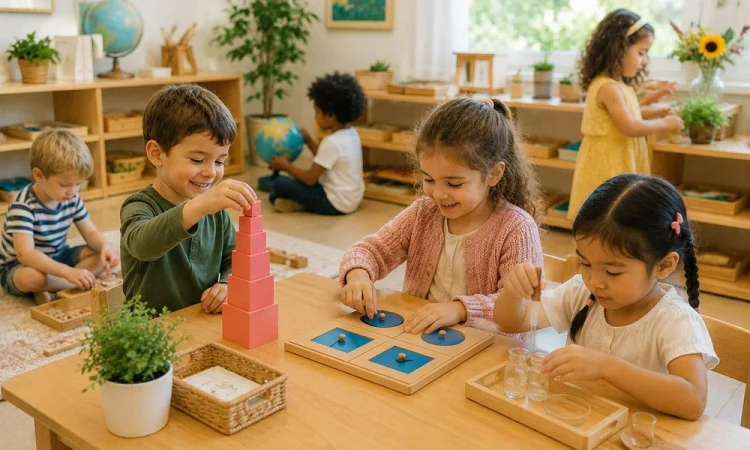
Montessori education embraces this holistic approach by recognizing that each child develops at their own pace and possesses a natural desire to learn. Through carefully prepared environments, hands-on experiences, and individualized guidance, Montessori programs help children build strong foundations that support lifelong growth.
At KV Montessori Academy, educators nurture the whole child by fostering independence, curiosity, and confidence during these formative years. Through a child-centered approach rooted in Montessori principles, students develop essential skills that prepare them not only for elementary school but also for a lifetime of meaningful learning and achievement.
“The goal of early education is not simply to prepare children for school-it’s to prepare them for life.”
The Importance of Early Childhood Development
The first few years of life represent one of the most significant periods of brain development. During this time, children establish neural connections at an extraordinary rate, which helps shape their future learning, behavior, and emotional health.
Experiences during early childhood help shape:
- Language development
- Cognitive abilities
- Social competence
- Emotional regulation
- Executive functioning skills
- Physical coordination
- Problem-solving capabilities
- Self-confidence
Positive educational experiences during these critical years can contribute to stronger academic performance and healthier social relationships later in life.
Conversely, environments lacking stimulation, support, or opportunities for exploration may limit children’s ability to develop essential skills to their fullest potential.
High-quality early education programs provide children with opportunities to engage in meaningful activities that encourage exploration, creativity, and independent thinking. Rather than focusing solely on memorization or standardized outcomes, effective programs emphasize the development of the whole child.
This comprehensive approach creates a strong platform upon which future learning can flourish.
Fostering a Love of Learning Through Curiosity and Exploration
Children are naturally curious. They are constantly asking questions, experimenting with their environment, and seeking to understand how the world works. Effective early childhood education nurtures this innate desire to learn rather than suppressing it through overly rigid instruction.
Montessori education is built upon the belief that children learn best when they are actively engaged in meaningful experiences that align with their developmental needs and interests.
Prepared environments encourage children to explore independently.
- Explore independently
- Make choices about their activities
- Repeat tasks until mastery is achieved
- Learn through hands-on experiences
- Develop intrinsic motivation
- Follow their natural curiosity
This approach helps children view learning as enjoyable and rewarding rather than something imposed upon them.
When children experience success through self-directed exploration, they develop confidence in their abilities and become more willing to embrace new challenges.
Importantly, fostering a love of learning during early childhood often establishes attitudes that persist throughout life. Children who associate education with curiosity and discovery are more likely to remain engaged learners as they grow older.
“Children who love learning don’t simply acquire knowledge-they develop the confidence to seek understanding throughout their lives.”
Building Independence and Self-Confidence
One of the hallmarks of Montessori education is its emphasis on independence. Young children possess a strong desire to do things for themselves, and educational environments that support this need help cultivate self-confidence and resilience.
Independence is encouraged through practical life activities and age-appropriate responsibilities, including:
- Choosing work independently
- Caring for personal belongings
- Preparing snacks
- Cleaning work areas
- Dressing themselves
- Solving minor problems
- Managing classroom routines
These experiences communicate an important message to children: they are capable individuals whose contributions matter.
As children practice completing tasks independently, they develop:
Self-Efficacy
Confidence in their ability to achieve goals and overcome challenges.
Decision-Making Skills
Experience making choices and understanding consequences.
Persistence
Willingness to continue trying even when tasks become difficult.
Responsibility
Understanding accountability for actions and commitments.
Rather than relying heavily on adult direction, children gradually develop the confidence to navigate situations independently while seeking support appropriately when needed.
This balance of autonomy and guidance contributes significantly to emotional well-being and long-term success.
Developing Social and Emotional Competence
Academic knowledge alone does not determine future achievement. The ability to build relationships, communicate effectively, regulate emotions, and demonstrate empathy plays an equally important role in lifelong success.
Early childhood classrooms provide valuable opportunities for children to develop social-emotional skills through daily interactions with peers and educators.
Montessori environments intentionally support social development by promoting the following:
Respect for Others
Children learn to value different perspectives and treat peers with kindness.
Conflict Resolution
Guided opportunities help children practice solving disagreements peacefully.
Cooperation
Collaborative experiences encourage teamwork and shared responsibility.
Emotional Awareness
Children develop vocabulary and strategies for understanding their feelings.
Empathy
Experiences foster compassion and consideration for others’ needs.
Mixed-age Montessori classrooms further enhance these opportunities. Younger children observe and learn from older peers, while older students develop leadership skills by offering guidance and support.
Social-emotional competence contributes to:
- Stronger friendships
- Better classroom behavior
- Increased resilience
- Improved communication abilities
- Greater adaptability in new situations
These skills continue to benefit individuals throughout adolescence and adulthood.
Supporting Cognitive Growth Through Hands-On Learning
Children learn most effectively when they actively participate in the learning process. Hands-on experiences engage multiple senses, making abstract concepts more concrete and meaningful.
Montessori education emphasizes experiential learning through carefully designed materials that encourage exploration and discovery.
Hands-on learning supports:
Critical Thinking
Children analyze information, identify patterns, and solve problems independently.
Concentration
Purposeful activities strengthen attention spans and focus.
Memory Development
Active engagement improves information retention.
Creativity
Open-ended experiences encourage innovation and flexible thinking.
Executive Functioning
Planning, organization, and self-regulation skills develop naturally.
Rather than memorizing isolated facts, children build profound understanding through direct experience.
For example, mathematical concepts become tangible through manipulatives, while language development is supported through interactive materials that connect symbols with meaning.
This active approach fosters genuine comprehension and equips children with the cognitive tools necessary for future academic success.
Preparing Children for Lifelong Success
Creating strong foundations for lifelong learning means preparing children for more than their next educational milestone. It means helping them become adaptable, confident, compassionate individuals capable of thriving in an ever-changing world.
The skills cultivated during early childhood influence countless aspects of future success, including:
- Academic achievement
- Emotional well-being
- Interpersonal relationships
- Problem-solving abilities
- Self-motivation
- Leadership potential
- Adaptability
- Lifelong curiosity
Children who develop confidence in their abilities are more likely to embrace challenges rather than avoid them. Those who learn how to manage emotions and collaborate effectively often experience healthier relationships and greater resilience.
Montessori education recognizes that every child possesses unique strengths and developmental timelines. By honoring individuality while providing consistent opportunities for growth, educators help students build the foundation necessary for lifelong learning and fulfillment.
The investment made during early childhood can yield benefits that extend far beyond the classroom, shaping not only academic outcomes but also character, confidence, and purpose.
Frequently Asked Questions
Why is early childhood education important?
Early childhood education supports cognitive, social, emotional, and physical development during a critical period of brain growth, helping establish foundations for lifelong success.
How does Montessori education support lifelong learning?
Montessori education fosters independence, curiosity, problem-solving, and intrinsic motivation through hands-on, child-centered learning experiences.
What skills help children become lifelong learners?
Important skills include confidence, resilience, communication, emotional regulation, critical thinking, adaptability, and a love of learning.
How does Montessori encourage independence?
Children are given opportunities to make choices, complete tasks independently, and take responsibility for their environment using age-appropriate activities.
What is the goal of Montessori education?
Montessori education aims to support the development of the whole child by nurturing academic, social, emotional, and practical life skills.
Build a Strong Foundation for Your Child at KV Montessori Academy
The early years offer an extraordinary opportunity to nurture the skills, attitudes, and confidence that support lifelong learning. Through a child-centered Montessori approach, children can develop independence, curiosity, compassion, and resilience while building strong academic foundations.
At KV Montessori Academy, dedicated educators create enriching environments that empower children to explore their interests, discover their strengths, and grow into capable, confident learners. By focusing on the whole child, the academy helps students develop the tools they need not only to succeed in school but also to thrive throughout life.
If you are searching for an educational experience that prioritizes meaningful development and lifelong success, KV Montessori Academy invites you to learn more about its Montessori programs.
Schedule a Tour today and discover how KV Montessori Academy helps children build strong foundations for a lifetime of learning.